
Record any sound. Play it as a synth.
Two layers, 8 ms latency. Record a guitar, a kettle or your own voice — it becomes an oscillator, with the filter, the envelopes and the arpeggiator behind it.
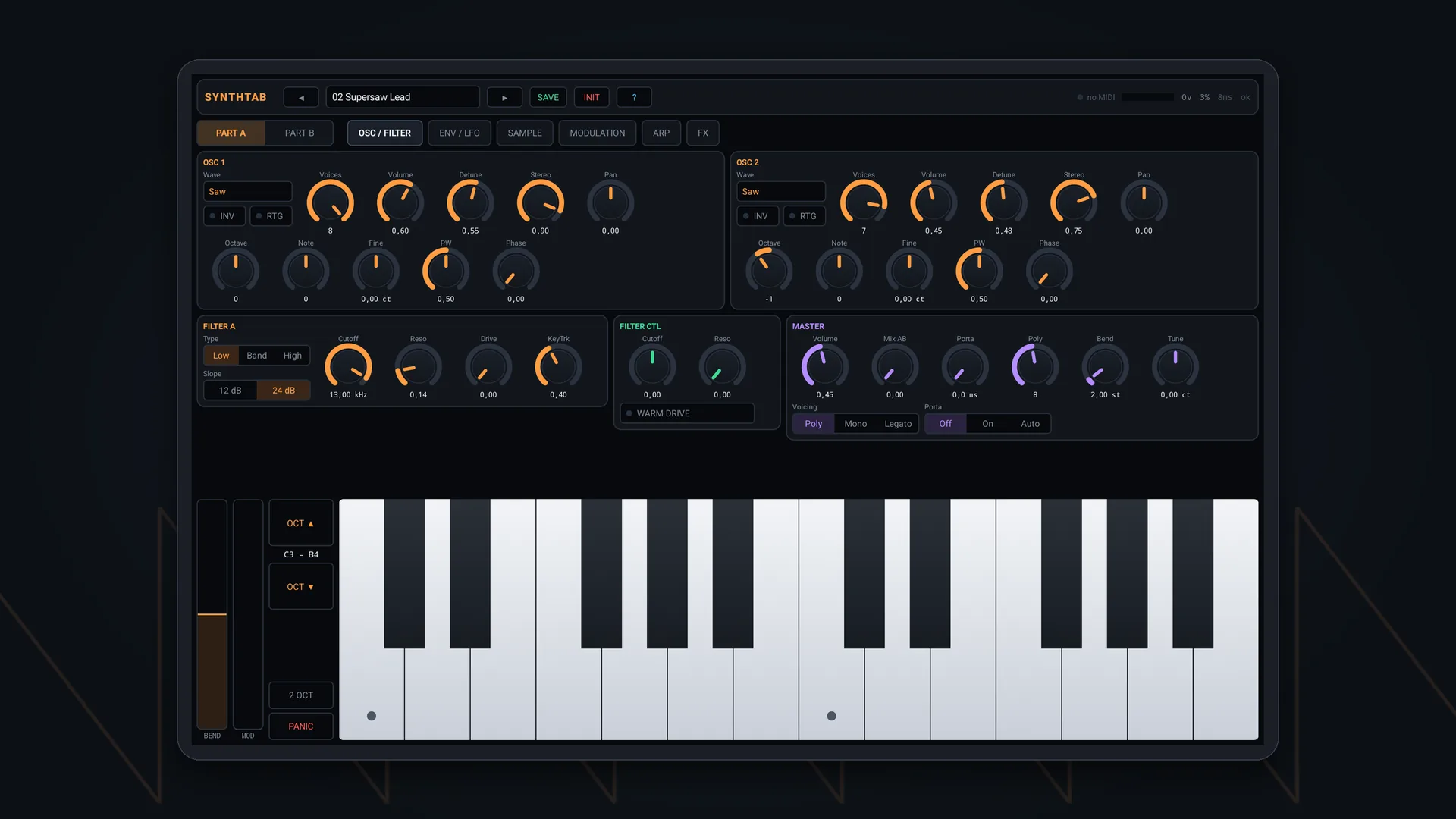
Main screen · layer A and B
Your recording is just another waveform
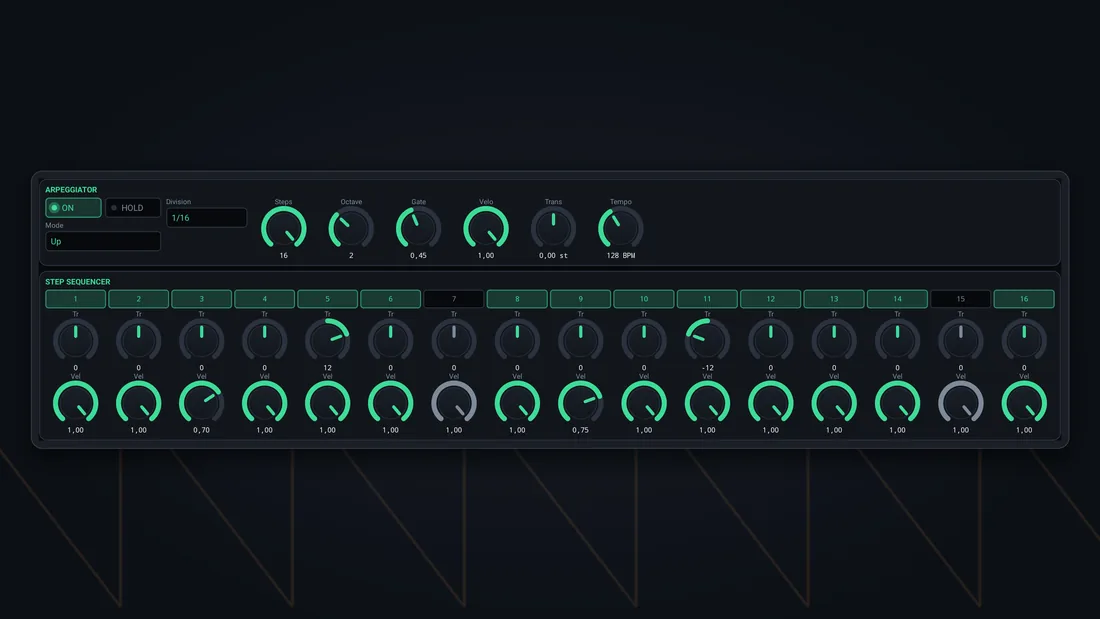
Sample and Granular sit in the same waveform list as Saw and Triangle — so a recording inherits unison, the ladder filter, both envelopes, the arpeggiator and all 46 mod destinations.
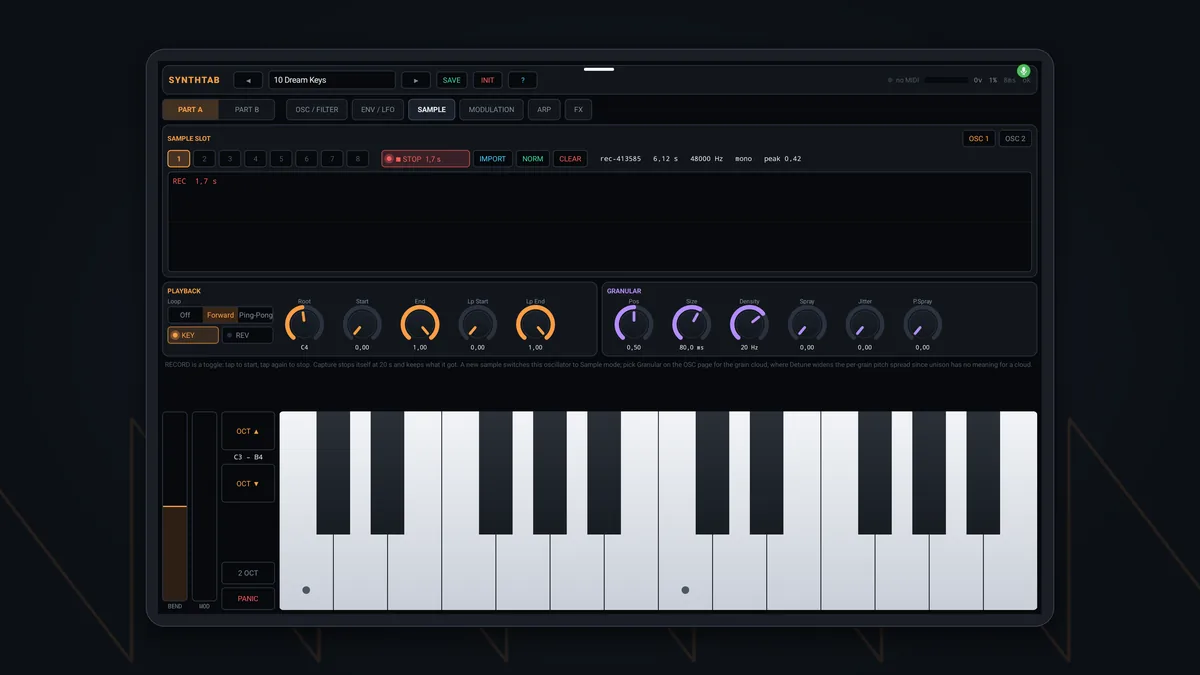
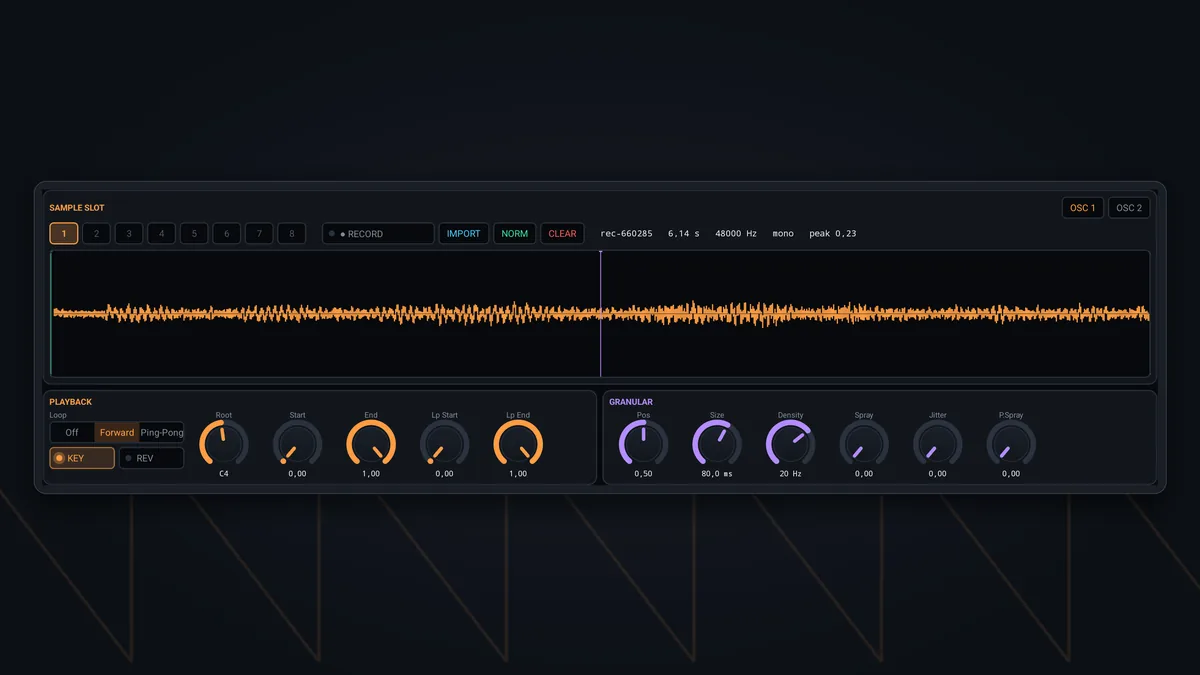
Not a toy with three knobs
Two independent layers, each a full synth. One key can play a 2 ms pluck and a 2 s pad at the same time.
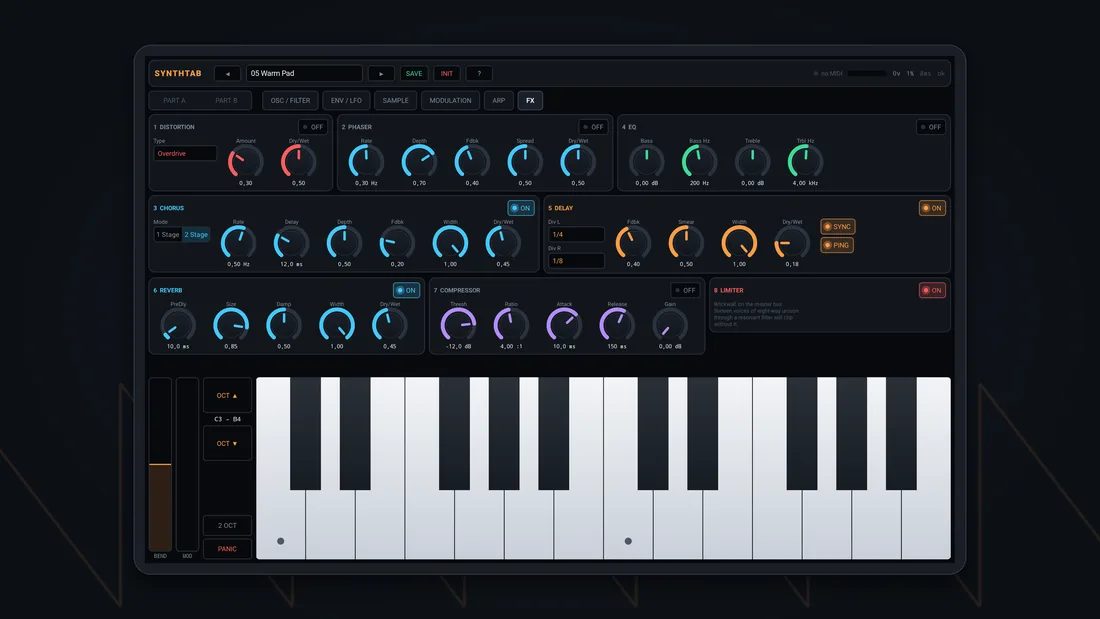
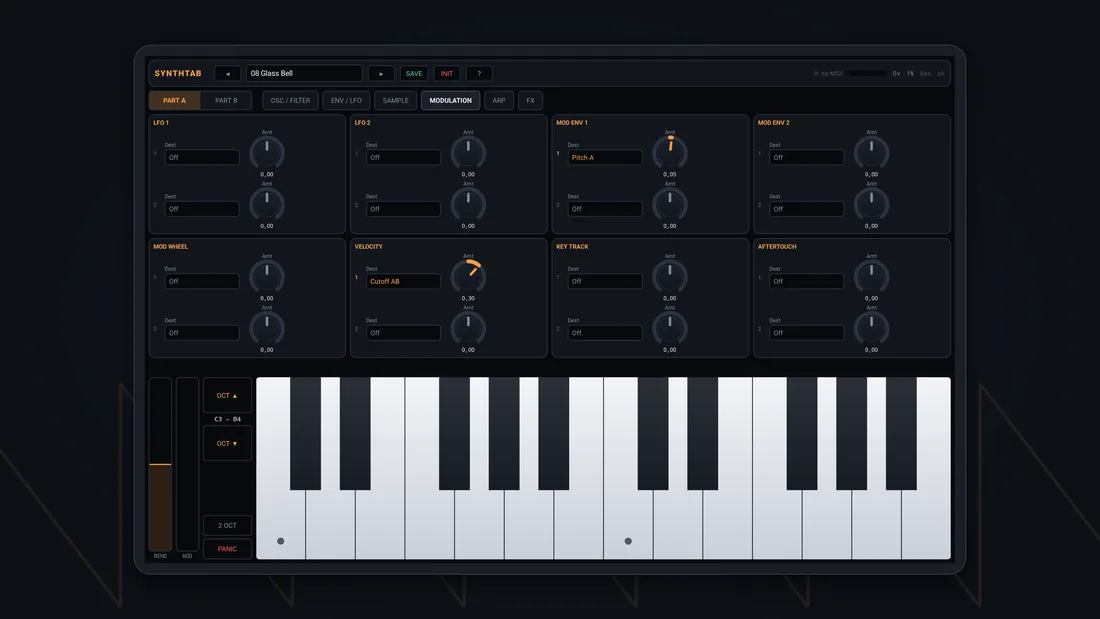
8 ms — you feel the key, not the delay
Latency is the difference between an app and an instrument. Three things you notice in the first minute.
Chords don't smear
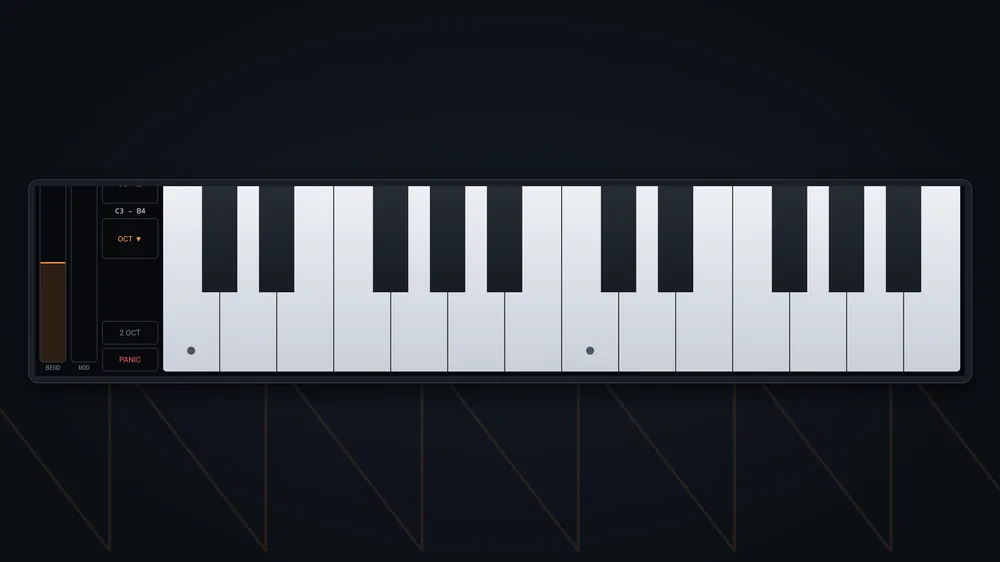
Hold sixteen notes and keep playing. A stolen voice fades out — never a click.
Your recording stays in tune
A sample played three octaves up tracks within four cents, and stays clean.
You can see the headroom
The top strip shows level, voices, engine load and a glitch counter that reads ok until something goes wrong.
Measured on a Galaxy Tab S8+: 48 kHz, 8 ms buffer, ten voices of a heavy pad at 15% of the callback budget, zero underruns.
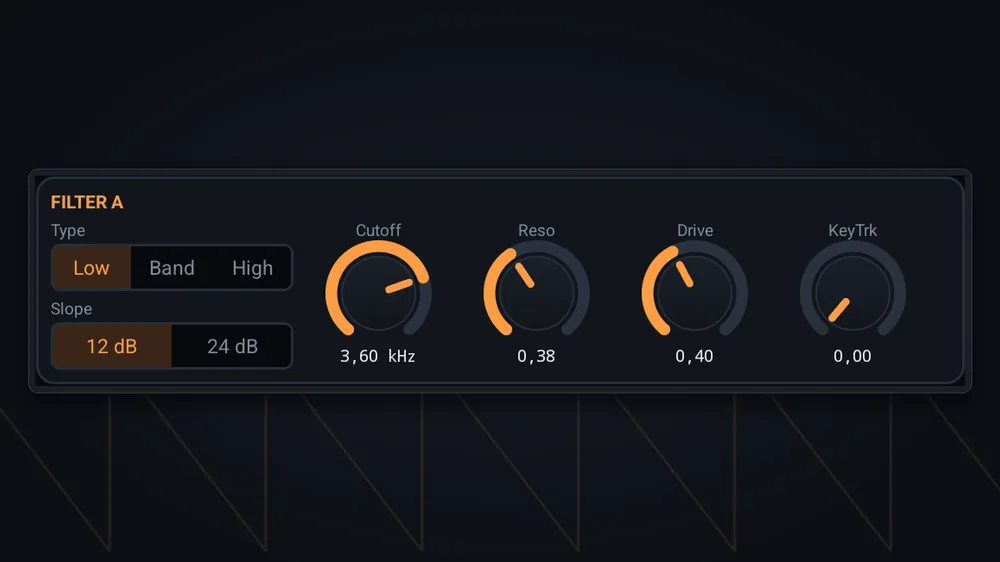
Pay once. Own it. Play it on a plane.
An instrument should not stop working because a card expired. Three things here are structural, not promises.
One payment, every update
Pay once. Every future version arrives as an ordinary Play update, tied to your Google account — a new tablet does not mean buying it again.
No subscription, no tiers, no in-app purchases, no ads.
Works with the plane on
No INTERNET permission — check the app's permission list yourself. Not “offline mode”: there is no network code to switch off.
No account, no cloud, no licence check to fail in a basement.
Nothing about you is measured
No analytics, no crash SDK, no advertising ID, no telemetry.
Recordings and presets sit in private storage and never leave the tablet.
One exception: Google reports its own aggregate install and crash figures to the developer console, as it does for every app. Anonymised, but worth saying. Details in the privacy policy.
Built for tablets in landscape. It runs on a large phone, but the panels get cramped — better you know before you pay.
Bring something to play
Whatever you can record becomes an oscillator.